
Redcedars, junipers and windbreak rows
Cedar Tree Removal in Wichita, KS
Overgrown and bagworm-stripped cedars cut out of yards, fence rows and acreages.
- We come out and look before we price, anywhere in Wichita and Sedgwick County
- Each item on the estimate priced on its own
- We confirm where the wood goes before work begins
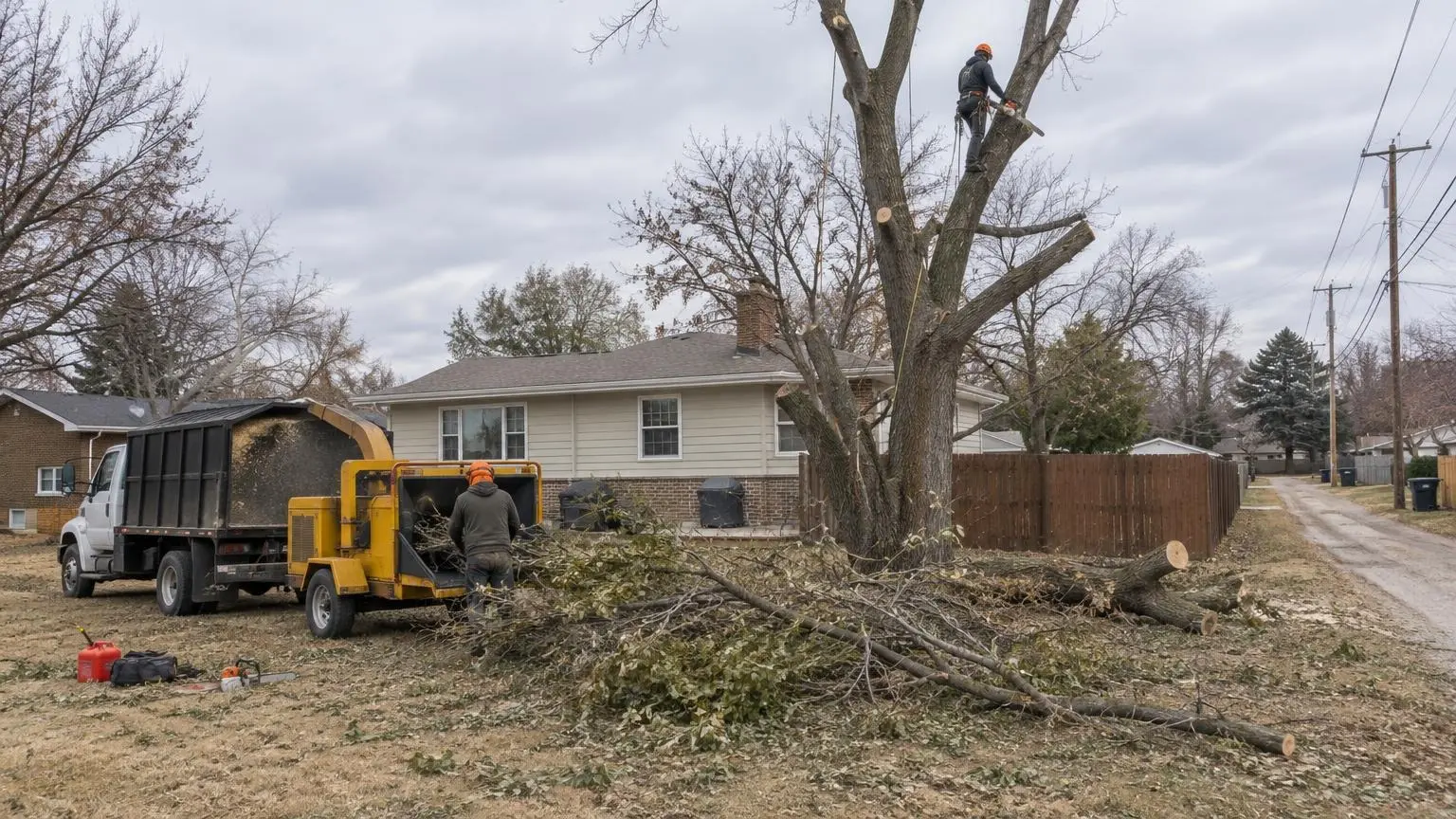
Cedars That Took Over the Yard
Cedar tree removal around Wichita usually involves eastern redcedar, the native juniper that shows up in windbreaks, along fence lines and in the corners of older yards. Birds spread the seeds, so cedars come up in places nobody planted them, and they grow into dense, prickly cones that block views, crowd out grass, and hold dead brown foliage on the inside. Cedars are on the Kansas Forest Service's preferred evergreen list for this region when they are in the right spot. The problem is the ones in the wrong spot.
Why cedars are simpler to remove than most trees
K-State Research and Extension's guide to controlling unwanted trees says eastern redcedar will not resprout after cutting. That makes a cedar different from a Siberian elm or a hackberry, which sprout back from the stump. A cedar cut flush with the ground is gone for good, so many cedar jobs need only a low cut and cleanup, with stump grinding added only where you want to mow, plant or build over the spot.
Bagworms and browning cedars
Bagworms are the pest most Wichita homeowners notice on cedars and junipers. K-State says they feed on many trees and shrubs but especially junipers and arborvitae. The larvae hatch in May and build small bags of silk and foliage that grow to 1 to 2 inches by late summer and hang from the branches like ornaments. K-State's timing advice is to spray in the latter half of June, and it warns that controls applied in August are often a waste of time and money. A cedar that has been stripped bare for several years may be easier to replace than to nurse back.
Cedar windbreaks and fence rows
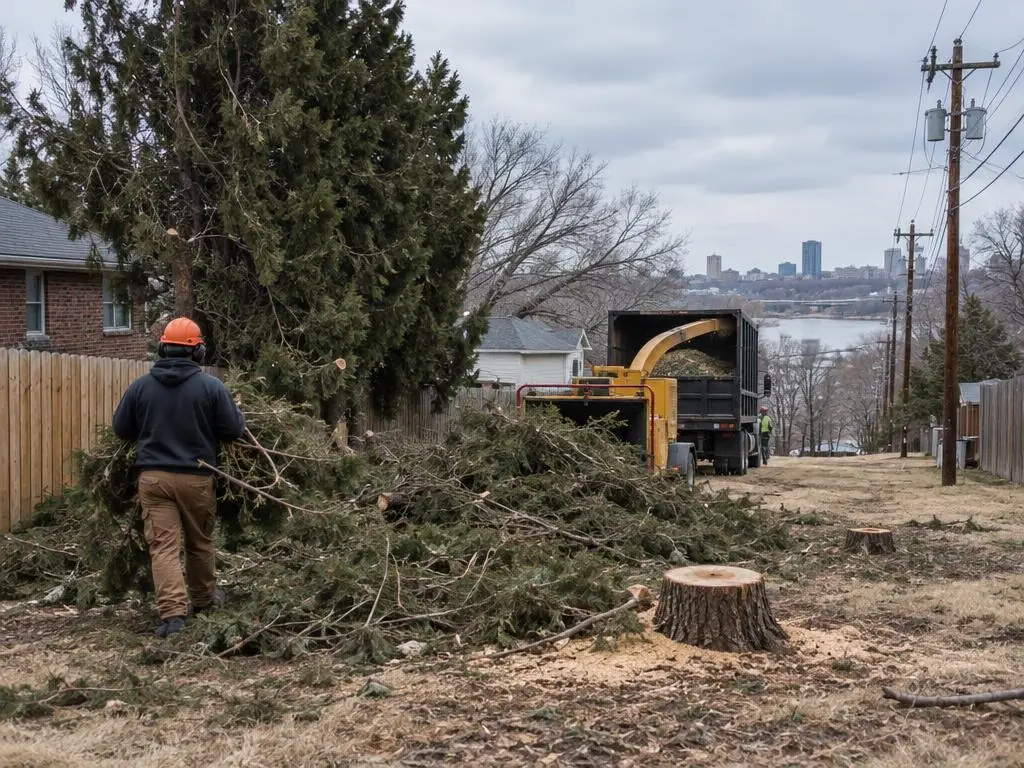
On acreages at the edge of Wichita and out in the county, cedars often stand in long rows, sometimes mixed with dying Scots pines from old windbreak plantings. Clearing a row is a different job from removing one yard tree: the trees are cut, dragged out and chipped in volume, and access along a fence is planned so gates and wire are not damaged. If you want to keep part of a windbreak for wind and snow protection, we can take out only the dead and crowded trees.
What happens to the cedar
Cedar wood is aromatic and rot-resistant, and some owners keep the trunks for posts or projects. Most of the brush is chipped; cedar chips make a long-lasting mulch for paths and beds. Anything you do not want is hauled away. Burning brush piles inside Wichita requires a fire department permit and 250 feet of clearance from property lines and buildings, which rules it out on most city lots.
What Is Included
Cedar work ranges from one overgrown tree by the house to a full windbreak row.
Single cedar removal
An overgrown redcedar or juniper by the house, driveway or fence cut and chipped.
Flush cutting
Cedars cut level with the ground, since they do not sprout back from the stump.
Windbreak and fence-row clearing
Rows of cedars, and dead pines mixed in, cut out and chipped in volume.
Selective thinning
Dead and crowded trees taken out of a windbreak while healthy ones stay.
Cedar chips and posts
Chips left for mulch and straight trunks set aside if you want to keep them.
Common Cedar Removal Prices
| Job | Published range |
|---|---|
| Cedar tree removal | $600 to $2,000 |
| Small tree, under 30 ft | $200 to $500 |
| Wood chipping | $50 to $100 |
| Stump grinding, first stump | $120 to $400 |
| Each additional stump | $30 to $60 |
| Typical minimum job fee | $100 to $300+ |
National ranges from HomeGuide's 2026 tree removal, trimming and stump grinding cost guides. Large cedars near buildings cost more; open rows done in volume often cost less per tree. Your written estimate is the price.
How It Works
1. Count and measure
We look at each cedar or the whole row, the access along the fence, and what you want to keep.
2. Price in writing
Each tree or row, flush cut or ground stump, and what happens to the chips and trunks.
3. Cut and drag
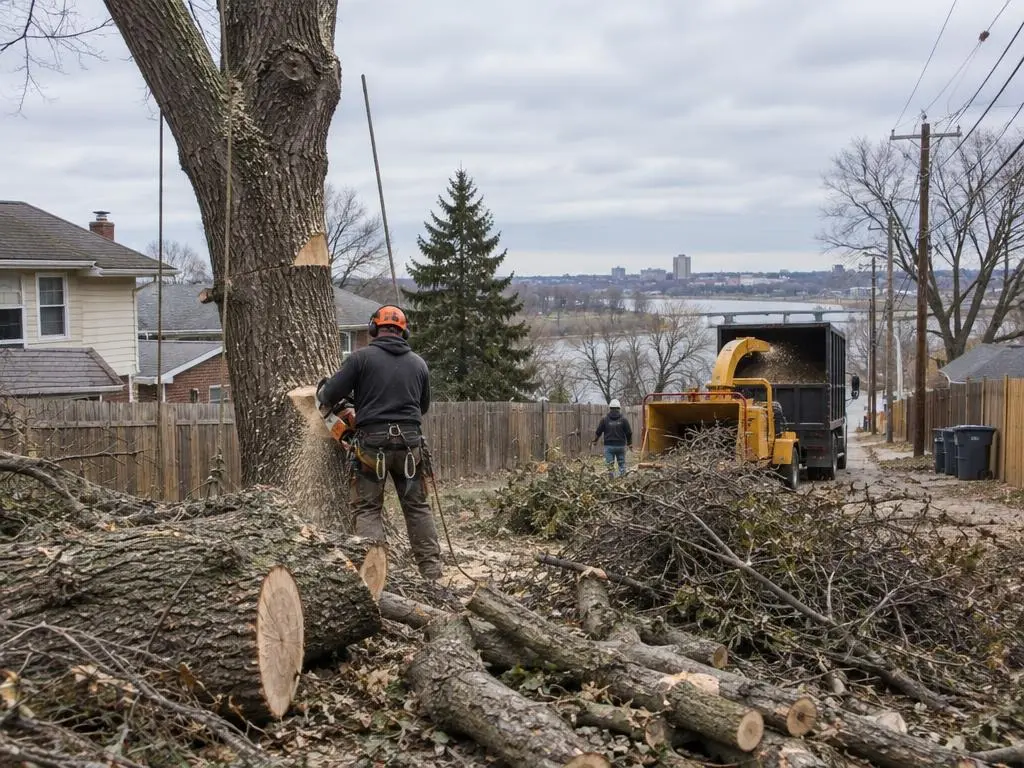
Trees are cut low and pulled out to the chipper without tearing up fences or gates.
4. Cleanup
Brush chipped, chips spread or hauled, and stumps ground where agreed.
Why Choose Us for Cedar Tree Removal
No grinding you do not need
Cedars do not resprout, so we only grind stumps where you plan to mow, plant or build.
Windbreaks thinned, not wiped out
If part of a row still blocks wind well, we can take only the dead and crowded trees.
Cedar Tree Removal Questions
Will a cedar grow back after it is cut down?
No. K-State Research and Extension says eastern redcedar will not resprout after cutting, so a cedar cut flush with the ground is gone. New seedlings can still come up from seed that birds drop, so check fence lines every year or two.
How much does cedar tree removal cost?
HomeGuide's 2026 national guide lists cedar removal at about $600 to $2,000 per tree, with small trees under 30 feet often less. Size, closeness to buildings and how many trees are done together change the price. We give a written price after seeing them.
Can bagworms kill my cedar?
Heavy feeding year after year can strip a cedar or juniper badly, and junipers often do not regrow foliage on bare branches the way leafy trees do. K-State advises spraying in the latter half of June, after the larvae have hatched, and says August sprays are often a waste. If a tree is mostly bare, removal and replanting may make more sense.
Do you clear cedar rows on acreages outside Wichita?
Yes. Windbreak and fence-row clearing in Sedgwick County and the surrounding area is a common cedar job. Tell us roughly how many trees, how tall, and how a truck and chipper can reach the row.
Cedar Tree Removal Service Areas
- Tree Service in Wichita, KS
- Tree Service in Derby, KS
- Tree Service in Haysville, KS
- Tree Service in Park City, KS
- Tree Service in Bel Aire, KS
- Tree Service in Andover, KS
- Tree Service in Maize, KS
- Tree Service in Goddard, KS
- Tree Service in Valley Center, KS
- Tree Service in Mulvane, KS
- Tree Service in Rose Hill, KS
- Tree Service in Kechi, KS
- Tree Service in Augusta, KS
- Tree Service in El Dorado, KS
- Tree Service in Newton, KS
- Tree Service in Clearwater, KS
- Tree Service in Cheney, KS
- Tree Service in Eastborough, KS
- Tree Service in Sedgwick, KS
- Tree Service in Colwich, KS
- Tree Service in Towanda, KS
- Tree Service in Mount Hope, KS
- Tree Service in Halstead, KS
Get a Cedar Tree Removal Estimate
Free cedar removal estimates in Wichita and on nearby acreages.