
Two rivers, a dozen creeks and a lot of old shade trees
Tree Service in Wichita, KS
Pruning, removal and storm cleanup for a city where the wind does a lot of the damage.
- We come out and look before we price, anywhere in Wichita and Sedgwick County
- Each item on the estimate priced on its own
- We confirm where the wood goes before work begins
A Big City With Old Trees and Hard Wind
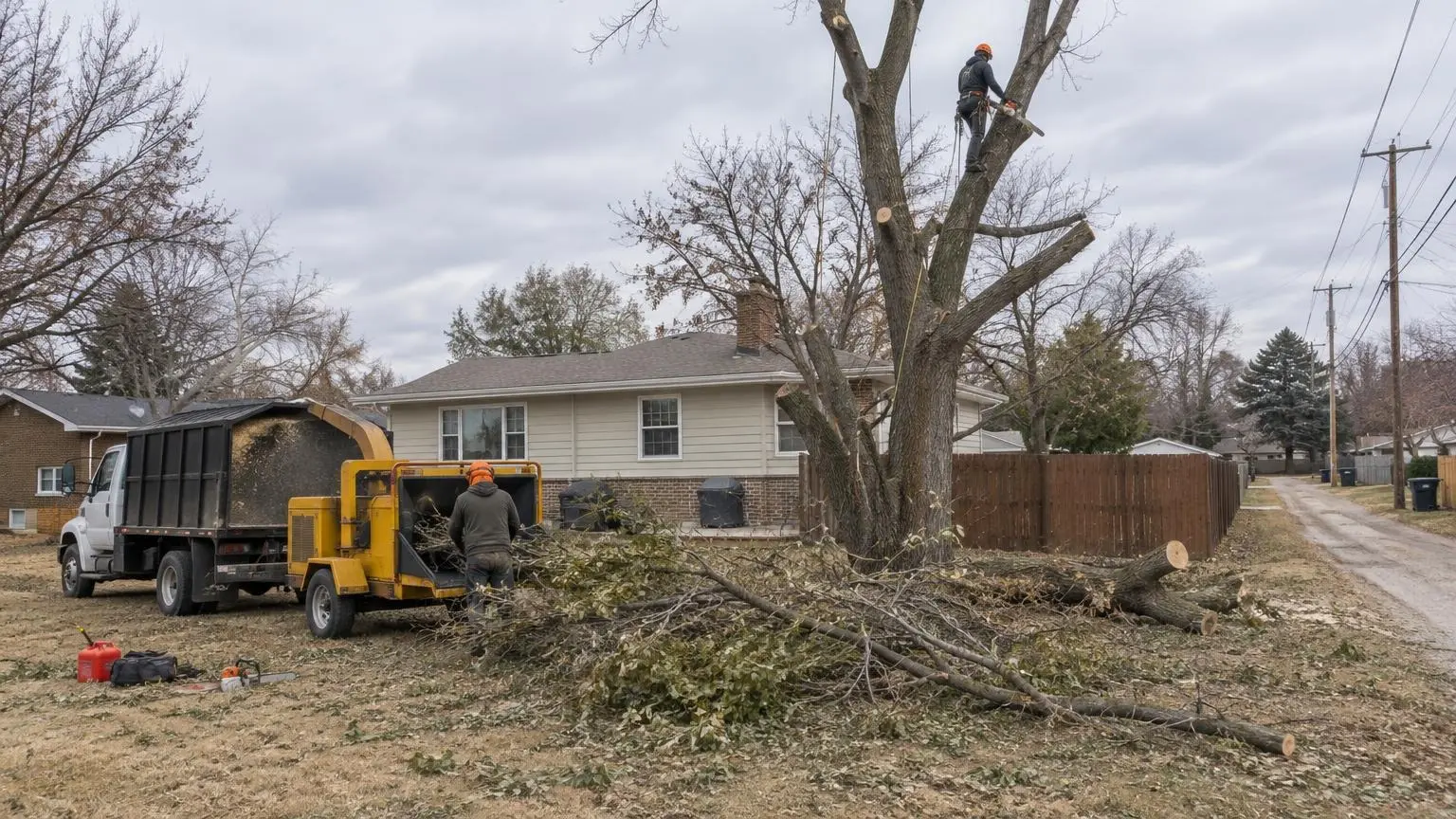
Elite Tree Service Wichita does most of its tree service work inside Wichita itself, from the older streets east of downtown to the newer subdivisions on the far west and northeast sides. The city covers roughly 162 square miles of land, and the trees vary as much as the housing does. A 1910s bungalow in College Hill usually comes with a towering elm or silver maple that has been pruned (or not) by several owners. A 2005 home near the edge of town tends to have a row of fast-growing ornamentals that are now hitting the gutters. We plan each job around the tree in front of us, not a flat rate.
Wind is the main reason trees fail here
Wichita's average wind speed is about 13 mph, and spring thunderstorms routinely push far past that. On June 17, 2025, the National Weather Service recorded a 102 mph gust at the Wichita airport, the highest it had ever measured in the city. Sedgwick County logged about 250 downed power line reports and roughly 85,000 people lost power. A large tree came down on homes in the 1200 block of South Pershing, and a limb hit a garage in Riverside. Most of the trees that fail in a storm like that had a warning sign beforehand: a split fork, a hollow base, a dead leader or a heavy limb reaching over a roof.
Ice is the other half of the story
The January 2005 ice storm left a quarter to half an inch of ice across much of the area and became the costliest ice storm in Kansas history at the time, with more than 50,000 people in Sedgwick County without power. Ice loads hit the same weak points wind does. Thinning a crown and taking out deadwood before winter is the cheapest storm insurance a Wichita homeowner can buy.
Neighborhoods we spend a lot of time in
- College Hill: most homes were built between 1900 and 1934, and the yards have the big shade trees to match. When the May 1999 tornado moved north through the city, NWS noted numerous trees uprooted as far north as College Hill even though structural damage there was minimal.
- Riverside: platted in 1886 and wrapped by the Arkansas and Little Arkansas rivers, with tall trees over narrow lots and alleys.
- Delano and Midtown: historic neighborhoods with mature canopy and tight access, where rigging limbs down by rope is often safer than dropping them.
- Southeast Wichita (Oaklawn and Planeview area): wartime housing areas where the April 14, 2012 EF3 tornado did its worst damage.
What happens to the wood
Wichita's Brooks Landfill at 4100 N. West Street accepts tree debris and other vegetation by weight, and logs or stumps over three feet in diameter carry an added charge per ton. We haul brush and wood from every job unless you ask us to leave firewood or chips, and the estimate says which you chose.
Pests and soil we watch for
Sedgwick County soils run from sand near the rivers to heavy clay, and K-State Research and Extension notes pH is usually 7.2 or higher. That alkaline soil is why so many Wichita pin oaks and silver maples have yellow leaves with green veins (iron chlorosis). We also check Scots and Austrian pines for pine wilt, and elms for Dutch elm disease, before recommending pruning or removal.
Call (316) 512-2394 or send the form with a photo of the tree. We'll walk the yard, mark what needs to go, and leave a written estimate. Get a free estimate
What to Know in Wichita
- Record wind, June 2025. NWS Wichita measured a 102 mph gust at the airport on June 17, 2025. About 250 downed power line reports came in across Sedgwick County, and about 85,000 residents lost power.
- Older housing east of downtown. College Hill was platted during the 1880s boom, and most of its houses were built between 1900 and 1934. Its 22-acre College Hill Park was once the Wichita Country Club.
- Brooks Landfill wood rules. Brooks Landfill, 4100 N. West Street, takes tree debris and vegetation. Logs and stumps over 3 feet in diameter cost the standard fee plus $22 per ton, and coarse mixed-wood mulch is free.
- A state champion elm. The Kansas Forest Service champion list includes a slippery elm in Wichita, added in 2026, measuring 183 inches around, 93 feet tall with a 64-foot crown spread.
- Alkaline soil. K-State's Sedgwick County Extension notes soils from sandy to heavy clay with pH usually 7.2 or higher, which drives iron chlorosis in pin oak, silver maple and sweet gum.
Wichita Questions
Is there a tree service near me that works in the older Wichita neighborhoods with alleys and tight side yards?
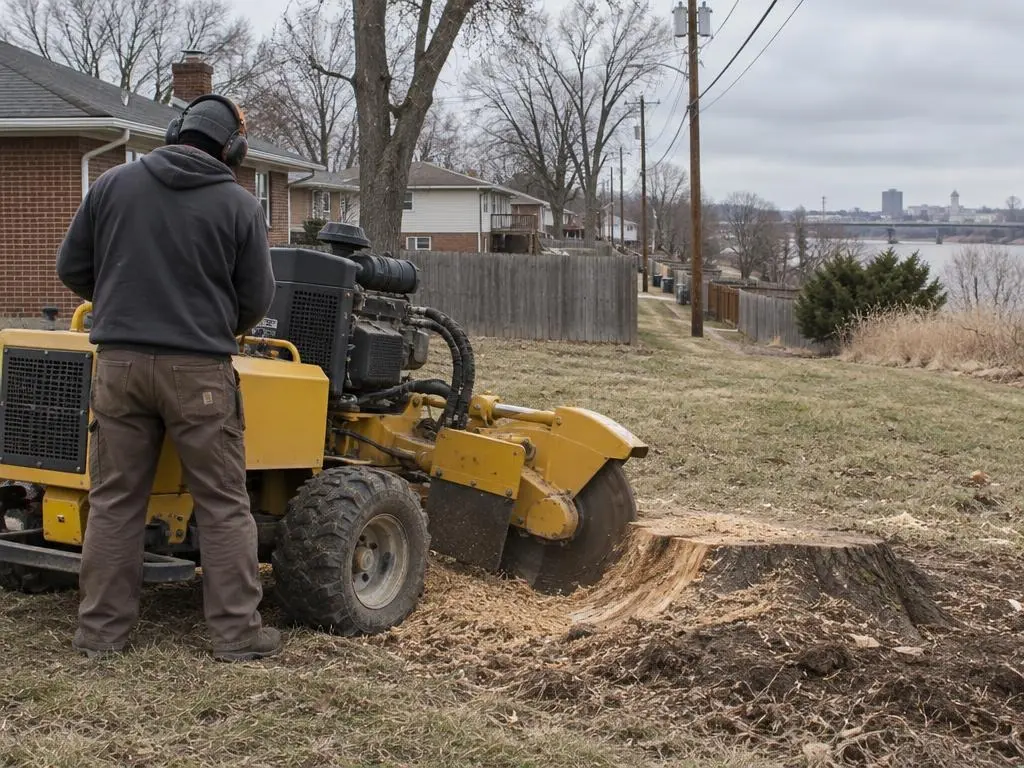
Yes. Much of our Wichita work is in places like College Hill, Riverside and Delano, where a truck can't always reach the tree. In those yards we usually climb the tree, lower limbs by rope and carry brush out by hand, so the lawn and fences stay intact.
My pin oak's leaves are yellow with green veins. Does it need to come down?
Not necessarily. That pattern is classic iron chlorosis, which is common in Wichita's alkaline soil. K-State lists soil and trunk iron treatments that can help. If the crown has started dying back in sections, we'll tell you honestly whether treatment still makes sense.
A big limb came down in the last storm and the tree looks lopsided. Is it safe?
It depends on where it tore. A clean break on a small limb usually just needs a proper pruning cut. A tear down into the trunk or a split between two leaders can leave the rest of the tree weak. Call (316) 512-2394 and we'll look at the wound before the next storm.
Can you leave the wood for firewood?
For most species, yes. We cut it to length and stack it where you want it. Elm and pine are the exceptions worth thinking about: K-State advises destroying elm wood with bark on and pine wilt wood rather than keeping them in a pile, because both carry the beetles that spread disease.
Free Estimates in Wichita, KS
Free on-site estimates anywhere in Wichita.
Tree Service Near Wichita
- Tree Service in Derby, KS
- Tree Service in Haysville, KS
- Tree Service in Park City, KS
- Tree Service in Bel Aire, KS
- Tree Service in Andover, KS
- Tree Service in Maize, KS
- Tree Service in Goddard, KS
- Tree Service in Valley Center, KS
- Tree Service in Mulvane, KS
- Tree Service in Rose Hill, KS
- Tree Service in Kechi, KS
- Tree Service in Augusta, KS
- Tree Service in El Dorado, KS
- Tree Service in Newton, KS
- Tree Service in Clearwater, KS
- Tree Service in Cheney, KS
- Tree Service in Eastborough, KS
- Tree Service in Sedgwick, KS
- Tree Service in Colwich, KS
- Tree Service in Towanda, KS
- Tree Service in Mount Hope, KS
- Tree Service in Halstead, KS